2026-10-24
Managing HOA Reserve Funds for Aging Infrastructure
Learn how to manage HOA reserve funds for aging infrastructure. Step-by-step guidance on planning, funding, and avoiding special assessments.
Last Updated: October 23, 2026
Quick Summary
Managing HOA reserve funds for aging infrastructure requires identifying all shared assets, estimating replacement costs, developing a prioritized capital plan, and establishing sustainable contribution levels to spread expenses fairly across time and prevent financial crises.
- Conduct a complete asset inventory and condition assessment to document remaining useful life for every structural and mechanical system.
- Use a five-factor scoring method weighted by life safety, failure risk, cascading damage, service disruption, and cost efficiency to prioritize aging infrastructure projects.
- Create scenario models for base-case, high-inflation, and accelerated-deterioration conditions to identify decision triggers before emergencies occur.
- Update your reserve plan annually and conduct formal reserve study updates every three years to keep funding realistic as conditions and costs change.
- Communicate the reserve funding strategy visually to homeowners with timelines showing when major work will happen and why contributions are necessary.
Table of Contents
- Why Aging Infrastructure Demands a Reserve Strategy
- Step 1: Conduct a Complete Asset Inventory and Condition Assessment
- Step 2: Estimate Repair and Replacement Costs for Major Systems
- Step 3: Develop a HOA Reserve Study for Aging Infrastructure
- Step 4: Create a HOA Reserve Funding Plan with Prioritization
- Step 5: Establish a HOA Reserve Fund Investment Policy
- Step 6: Set Reserve Contributions and Manage Special Assessments
- Step 7: Plan for Inflation and Construction-Cost Volatility
- Step 8: Monitor, Update, and Adjust Your Reserve Plan Annually
- Common Mistakes to Avoid When Managing Aging Infrastructure Reserves
Why Aging Infrastructure Demands a Reserve Strategy
Managing HOA reserve funds for aging infrastructure isn’t optional, it’s a fiduciary obligation that protects property values, prevents financial crises, and keeps communities functioning safely. When roofs fail, pipes burst, or roads crack, communities without adequate reserves face a brutal choice: levy devastating special assessments or defer critical repairs and watch property values decline.
The reality is stark. Aging buildings deteriorate on predictable schedules. Concrete cracks. HVAC systems fail. Structural components weaken. If your HOA hasn’t planned for these inevitable expenses, you’re gambling with homeowners’ equity and your board’s legal liability.
A proper reserve strategy accomplishes three things: it identifies what needs fixing, estimates the true cost, and spreads those costs fairly across time so no single year triggers financial shock. This is where managing HOA reserve funds for aging infrastructure becomes essential, it transforms a crisis waiting to happen into a manageable, predictable financial plan.
Step 1: Conduct a Complete Asset Inventory and Condition Assessment
Start by documenting every shared asset your community owns. This inventory becomes the foundation for everything that follows.
Document all shared assets and common areas
List every structural and mechanical system: roofs, foundations, walls, windows, doors, parking surfaces, drainage systems, retaining walls, fences, landscaping features, elevators, HVAC systems, plumbing, electrical systems, gates, and private roads. Include amenities like pools, clubhouses, and recreational facilities. Don’t skip the small stuff, weatherstripping, caulking, and sealants fail too, and their replacement costs add up.
For each asset, record the year installed or last major repair. This baseline tells you how much useful life remains. A roof installed in 1998 is approaching replacement. One installed in 2020 has decades left.
Evaluate structural condition and remaining useful life
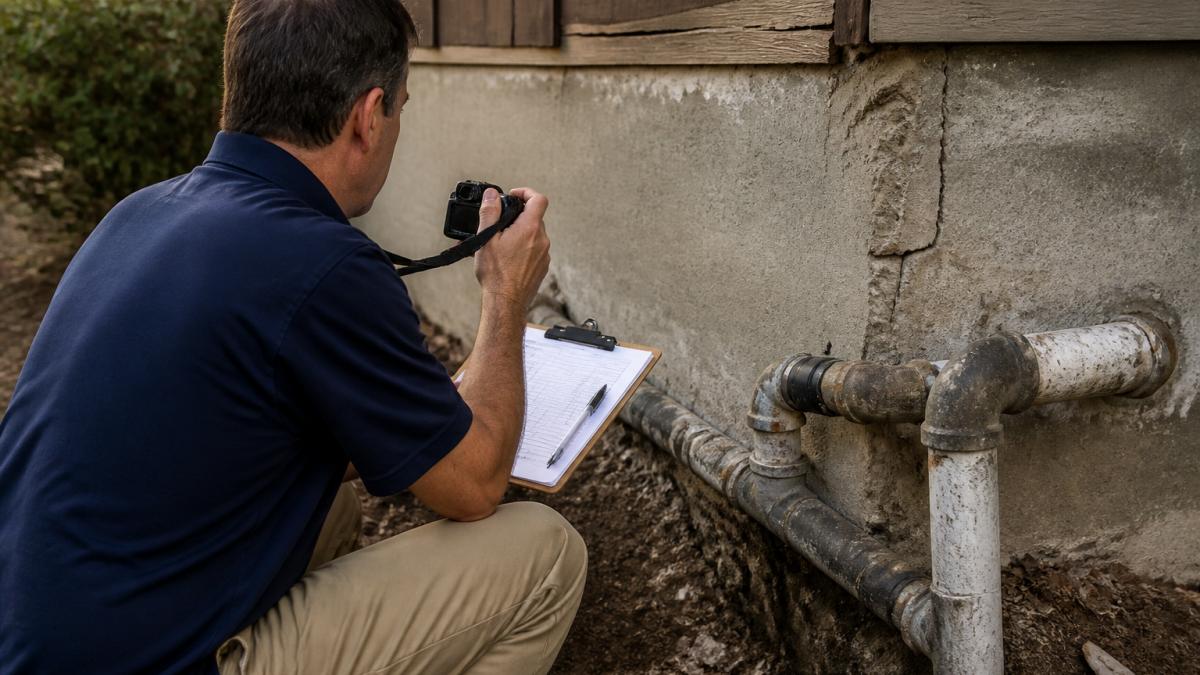
Walk every building. Look for visible cracks, water stains, rust, deterioration, or soft spots. Take photographs. Note what you see: Is the concrete spalling? Are there foundation cracks? Is the roof sagging? Are gutters pulling away?
Remaining useful life is critical. A 20-year-old HVAC system might have 5-10 years left. A 30-year-old roof probably has 3-5 years. Structural components like foundations and framing can last 50+ years if maintained, but deferred maintenance accelerates decline. The point isn’t guessing, it’s recognizing that every system has a finite lifespan, and your reserve plan must account for that timeline.
This is where professional assessment makes sense. A qualified reserve study provider can evaluate condition more thoroughly than a volunteer board can, assign realistic remaining useful life estimates, and document findings in a way that holds up if a homeowner questions your reserve levels.
Step 2: Estimate Repair and Replacement Costs for Major Systems
Accurate cost estimation separates realistic plans from fantasy. Underestimate costs and your reserve fund runs dry before repairs are done. Overestimate and you levy unnecessary assessments.
Infrastructure-specific planning for pipes, drainage, roads, and elevators
Different systems have different failure modes and replacement costs. Pipe replacement, whether sewer lines, water mains, or interior distribution, runs into five figures per unit in older buildings. Drainage systems that fail cause foundation damage, which is catastrophically expensive. Road repaving for a large community can exceed six figures. Elevators require specialized inspection and maintenance; replacement is six figures per unit.
Get actual quotes from contractors who specialize in each system. A general contractor’s estimate for pipe replacement might miss the cost of permits, inspections, or unexpected discoveries during excavation. An elevator specialist will account for codes, testing, and certification that a generalist won’t.
For aging infrastructure, don’t assume today’s costs. Construction costs rise. Material scarcity happens. Labor rates increase. Your cost estimates should reflect realistic inflation over the next 10-20 years, not static pricing.
Step 3: Develop a HOA Reserve Study for Aging Infrastructure
A reserve study is a professional analysis that quantifies your community’s capital needs and recommends funding levels. In California, the Davis-Stirling Act requires reserve studies for most associations. More importantly, a solid reserve study gives your board defensible documentation of why reserve levels are what they are.
A qualified reserve study provider will conduct a site inspection, review your community’s history, analyze asset conditions, estimate remaining useful life, project replacement costs, and calculate recommended reserve funding percentages. The output is a detailed report that shows homeowners exactly what you’re funding and why.
When selecting a provider, look for Davis-Stirling compliance, experience with aging buildings in your area, and the ability to integrate specialized assessments like SB 326/721 elevated-element inspections if your community has them. You can hire a qualified reserve study provider who understands the specific challenges of aging infrastructure and can deliver a report your board can confidently present to homeowners.
The reserve study becomes your roadmap. Without it, you’re making funding decisions in the dark.
Step 4: Create a HOA Reserve Funding Plan with Prioritization
Not every repair can happen at once. When multiple systems are aging simultaneously, you need a prioritization framework that balances safety, property protection, and financial reality, and that you can defend to homeowners who each have a different opinion about which project matters most.
The most useful approach is a transparent scoring method. Score every candidate project on five factors, weight them, and rank. Because the scores are visible, a board can explain why a drainage repair outranks a clubhouse refresh without relying on seniority, squeaky-wheel advocacy, or guesswork.
A five-factor scoring method for failing systems
Score each project from 1 (low) to 5 (high) on the following factors, then apply weights that reflect your community’s risk profile. A common weighting is:
- Life safety, 30%. Does failure threaten injury or loss of habitability? A compromised retaining wall above a walkway, a failing elevator, or a structural crack scores 5. A worn parking surface scores 1.
- Failure risk, 25%. How likely is failure within the planning horizon? Use remaining useful life, inspection findings, and repair history. A pipe with active leaks scores 5; a 20-year-old roof with no observed deterioration scores 2.
- Cascading damage, 20%. If this system fails, what else does it take with it? Drainage failure that undermines foundations scores 5. A failed gate scores 1.
- Service disruption, 15%. How many residents lose access, comfort, or use of common areas? A single elevator serving a mid-rise scores 5; a decorative fence scores 1.
- Cost efficiency, 10%. Does acting now avoid a larger future cost? Preventive sealant and drainage work often scores high here because it is cheap relative to the damage it prevents.
Multiply each score by its weight, sum the weighted scores, and rank. Revisit the weights annually, a community with a single elevator and many older residents may reasonably raise the service-disruption weight.
Tip: Publish the scoring table in your board packet and in the homeowner newsletter. The value of the method is not the precision of the numbers; it is that homeowners can see the reasoning and challenge the inputs rather than the outcome.
Infrastructure-specific failure modes to score against
Generic reserve advice stops at roofs, pools, and HVAC. Communities with complex infrastructure need to plan for systems that fail invisibly and expensively:
- Pipes and sewer lines. Cast iron and galvanized lines in older buildings corrode from the inside; failure often appears as repeated backups or slab leaks rather than a visible break. Score high on cascading damage because a sewer backup can force unit-level remediation.
- Drainage and stormwater systems. Clogged or collapsed storm lines, failed swales, and undersized inlets cause ponding against foundations. Because the damage shows up in foundations and basements rather than at the drainage asset itself, these projects are routinely deferred until they are emergencies.
- Retaining walls. Walls that show bulging, tilting, or weep-hole staining may be near failure. A wall failure can close a road, damage adjacent structures, and create liability exposure; score high on life safety and cascading damage.
- Elevators. Beyond replacement cost, elevators carry code, testing, and certification obligations. A single-elevator building has no redundancy, so service disruption scores high.
- Private roads and parking structures. Repaving and structural parking-deck repairs are large, lumpy expenses. Surface sealing on a predictable cycle is far cheaper than reconstructing a base that has failed from water intrusion.
Sequencing into a 10-year capital plan
Once ranked, sequence projects into a 10-year capital plan that respects both the scores and your cash flow. A practical pattern is to fund the top-ranked safety and cascading-damage projects first, then use the middle years to bundle related work, for example, repaving a road in the same season a drainage line beneath it is replaced, so the surface is not torn up twice.
Show homeowners the sequence and the peak years. A plan that visibly peaks in year four and declines afterward is easier to accept than a flat increase with no explanation, because residents can see when the pressure eases.
Learn five practical methods HOA boards use to prioritize repairs when budgets are limited and multiple systems need attention.
Score each infrastructure project on five weighted factors to create a defensible prioritization ranking.
| Factor | Weight | Scoring Basis |
|---|---|---|
| Life safety | 30% | Does failure threaten injury or loss of habitability? |
| Failure risk | 25% | How likely is failure within the planning horizon? |
| Cascading damage | 20% | If this system fails, what else does it take with it? |
| Service disruption | 15% | How many residents lose access or comfort? |
| Cost efficiency | 10% | Does acting now avoid a larger future cost? |
Step 5: Establish a HOA Reserve Fund Investment Policy
Reserve funds sit idle most of the time. That cash should earn returns, but not in ways that risk principal or lock funds up when you need them.
A reserve fund investment policy specifies which investments are allowed. Conservative approaches favor short-term bonds, CDs, money market funds, and stable-value funds. These earn modest returns, typically 4-5% annually in current conditions, but preserve capital and maintain liquidity.
Your policy should also specify how returns are allocated. Some communities reinvest returns into the reserve fund, accelerating funding. Others use returns to offset contribution increases. Either approach is defensible if documented in your policy.
Understand best practices for investing reserve funds to maximize returns while managing aging infrastructure risk and maintaining the liquidity your community needs.
Step 6: Set Reserve Contributions and Manage Special Assessments
This is where theory meets homeowner reactions. You’ve identified what needs fixing and estimated costs. Now you must decide how much homeowners contribute each month and whether special assessments are necessary.
Calculating annual contribution levels and funding goals
Your reserve study recommends a funding percentage, typically 70-100% funded, depending on your community’s age and condition. Fully funded means reserves equal the present value of all major repairs and replacements anticipated over the next 30 years. Seventy percent funded means you’re slightly behind but on a sustainable path.
Calculate your annual contribution by dividing the total reserve need by the number of years you want to fund it over. A community with a $2 million reserve need over 20 years needs $100,000 annually. Divide that by the number of units to get the per-unit monthly contribution.
This is where aging infrastructure makes budgets tight. Older communities have higher reserve needs, which means higher contributions. Homeowners resist increases. Your board’s job is explaining why the increases are necessary and unavoidable, and then executing the plan so homeowners see the improvements happening.
Communicating funding strategies to homeowners
Homeowners understand crisis better than they understand prevention. When you say “we need to increase reserves by 20%,” they hear “my HOA fees are going up.” When you show them photos of cracked foundations, failed pipes, or deteriorating roofs, they understand why.
Create a visual reserve plan. Show the current condition of major systems. Project when each system will need replacement. Explain how the proposed contribution level funds those replacements on schedule. Include a timeline showing when major work will happen, this reassures homeowners that contributions are going toward visible improvements, not a slush fund.
Hold meetings where you walk homeowners through the reserve study. Answer questions. Acknowledge that increases are painful. But be clear: deferring reserves doesn’t eliminate costs, it just delays them until they become emergencies that trigger much larger assessments.
Step 7: Plan for Inflation and Construction-Cost Volatility
Your reserve study estimates costs based on today’s prices. But inflation is real, and construction costs are volatile. A plan that doesn’t account for rising costs will underfund, and the shortfall usually surfaces at the worst possible moment, when a system fails and the money isn’t there.
The fix is not a single inflation assumption buried in a spreadsheet. It is scenario modeling: run your reserve plan under several cost and deterioration assumptions, see where it breaks, and decide in advance how the board will respond.
Build the base case, then stress it
Start with the reserve study’s base case, its cost estimates, assumed inflation, and remaining useful life figures. Then create at least three scenarios:
- Base case. General inflation of roughly 3% annually, with construction-specific costs rising somewhat faster. This is the plan you present to homeowners.
- High-inflation case. Raise the construction cost inflation assumption by several points and hold contributions flat. Note the year the reserve fund balance goes negative. That year is your decision point.
- Accelerated-deterioration case. Shorten remaining useful life on your highest-risk systems, for example, assume a roof or pipe system fails several years earlier than the study projects, and see whether the plan still covers it.
A fourth scenario is worth running for older communities: a simultaneous-failure case in which two or three high-ranked systems from your prioritization scoring fail in the same year. If the plan cannot absorb that, the board needs a stated contingency plan before the event, not after.
Warning: A reserve plan that only works under the base case is not a plan; it is a forecast. The board’s job is to know, in advance, which lever it will pull, a contribution increase, a phased project, a special assessment, or a reserve-fund loan, and under what conditions.
Model cost volatility, not just average inflation
Construction costs do not rise smoothly. Material shortages, labor availability, and bidding conditions can move project costs sharply in a single year, then flatten. A reserve plan that assumes a smooth 3% curve will look fine on paper and still fall short when a major project goes to bid in a tight market.
A practical response is to build a project-level contingency into the capital plan rather than a single global number. For large, lumpy projects, road reconstruction, elevator replacement, pipe replacement, carry a contingency sized to the uncertainty of that scope. Projects with hidden conditions (underground pipe, structural repair behind finishes) warrant a larger contingency than projects with well-defined scope (repainting, sealant replacement).
Decide the response levers now
Scenario modeling is only useful if it produces decisions. For each scenario, document the trigger and the response:
- Contribution adjustment. A defined increase if the fund balance falls below a threshold in the model.
- Project phasing. Splitting a large project across two budget years to smooth the cash requirement.
- Special assessment. The last resort, but one that is far less damaging when homeowners have seen the scenario and understand the trigger.
- Reserve-fund borrowing or assessment. Some governing documents and state laws constrain how reserves may be used or borrowed; confirm what your documents and applicable law permit before relying on this lever.
Adjust reserve contributions as construction costs and inflation rise to ensure your aging infrastructure plan stays funded even as market conditions change.
Step 8: Monitor, Update, and Adjust Your Reserve Plan Annually
A reserve plan isn’t static. Update it every year. Review what you spent versus what you budgeted. Assess whether major systems are deteriorating faster or slower than expected. Adjust contribution levels if necessary.
If you’re funding ahead of schedule, you might reduce contributions slightly. If inflation is running higher than expected or a major system is deteriorating faster than anticipated, you might need to increase contributions or accelerate a project. Annual reviews keep the plan realistic and responsive.
At Apex Reserve Study, we recommend a formal reserve study update every three years and a detailed annual review in between. This keeps your board informed, helps you catch emerging issues early, and gives homeowners confidence that you’re actively managing their community’s financial health.
Common Mistakes to Avoid When Managing Aging Infrastructure Reserves
The most common mistake is underfunding. Boards delay contribution increases to avoid homeowner complaints, then face catastrophic special assessments when aging systems fail simultaneously. Prevention costs less than crisis management.
A second mistake is ignoring deferred maintenance. A roof that’s “still functional” might be 20 years old and approaching failure. Waiting until it leaks means emergency replacement without proper planning. Regular condition assessments catch these situations before they become emergencies.
A third mistake is treating reserve studies as a one-time exercise. Conditions change. Systems fail faster than expected. Your reserve plan must evolve. Learn the most common pitfalls in reserve planning so your board avoids them and keeps your aging infrastructure strategy on track.
Managing HOA reserve funds for aging infrastructure is complex, but it’s essential. Underfunded reserves lead to special assessments that shock homeowners and damage board credibility.
Frequently Asked Questions
How often should an HOA update its reserve study for aging infrastructure?
Reserve studies should be updated annually at minimum, and a comprehensive reassessment is recommended every 3-5 years. If your community has aging infrastructure with accelerating deterioration, annual updates become critical to track changing conditions, cost estimates, and funding needs. California's Davis-Stirling Act requires regular reserve studies to remain compliant. Annual updates allow your board to adjust contributions based on actual spending and new asset conditions.
What is the best way to prioritize HOA reserve contributions when multiple systems are failing?
Prioritize based on three factors: safety risk (systems affecting resident safety first), revenue impact (failures that disrupt community use), and cost efficiency (addressing deferred maintenance before it worsens). Create a tiered funding plan where critical structural repairs and safety systems get first-year funding, mid-priority projects get second-year allocation, and lower-urgency items get planned for years 3-5. This approach prevents special assessments and spreads costs fairly across the community.
How can an HOA reduce the risk of a special assessment?
Maintain adequate reserve funding by setting contributions at or above the percent-funded goal recommended in your reserve study. Avoid deferring maintenance on aging infrastructure, as small repairs now prevent catastrophic failures later. Conduct regular condition assessments to catch deterioration early. Communicate your long-term funding strategy to homeowners so they understand why reserves are necessary. Working with a professional reserve study provider ensures your funding plan is realistic and compliant with state requirements.
What should an HOA reserve fund be used for?
Reserve funds cover major capital expenditures for common areas and shared assets, including roof replacement, road repaving, pipe repairs, HVAC systems, pool repairs, structural repairs, and elevator maintenance. Funds should not be used for routine operating expenses or minor repairs. In aging communities, reserves address deferred maintenance and infrastructure replacement. Your reserve study specifies which components qualify and the timeline for replacement, ensuring the board uses reserves appropriately and maintains compliance with fiduciary responsibility requirements.
Need a Reserve Study?
Get a free quote for your California HOA or condo association. We respond within 1 business day.
Get Your Free Quote